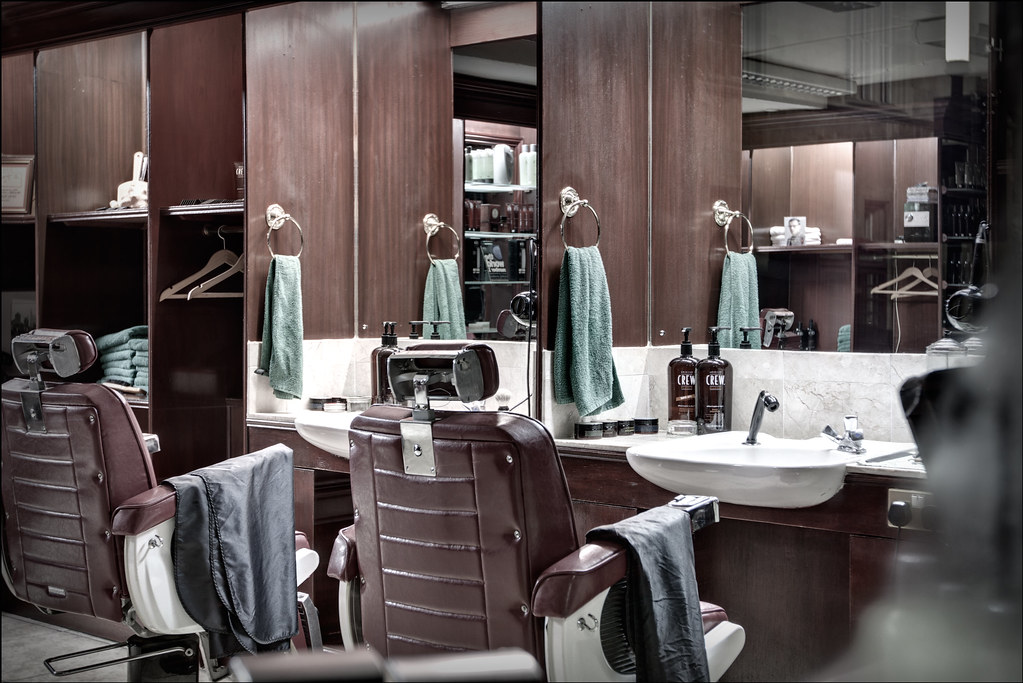
Barber School vs Cosmetology School: Which Career Is Right for You?
Walk into a barbershop and a salon on the same afternoon and you will feel the difference before anyone says a word. One hums with clipper buzz, quick turnarounds, and regulars who have sat in the same chair every second Thursday for years. The other runs on longer appointments, transformation reveals, and a service menu that can stretch past three hours per client. Both rooms are full of licensed professionals doing skilled work — but they hold different licenses, earned through different training, leading to genuinely different careers.
If you are deciding between barber school and cosmetology school, this comparison covers what each actually teaches, how the licenses differ legally, what the working lives feel like, and how to make the call for yourself rather than defaulting to assumptions.
What Each License Actually Covers
The two credentials overlap on haircutting and diverge everywhere else.
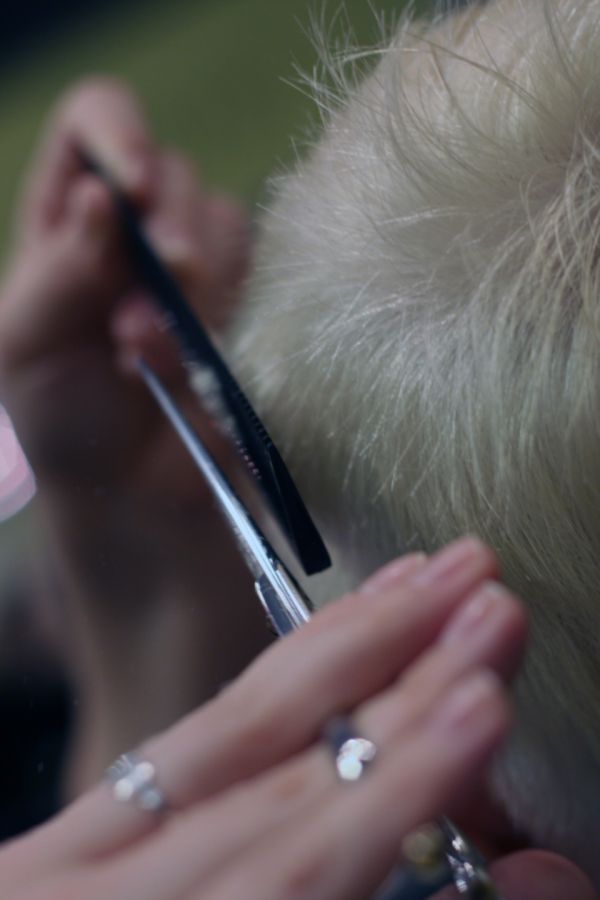
A barber license centers on short-form precision: clipper cutting, fading and tapering, beard design, and — the historic marker of the trade — straight-razor shaving, which in many states only barbers may legally perform. Chemical services appear in barber training, but briefly.
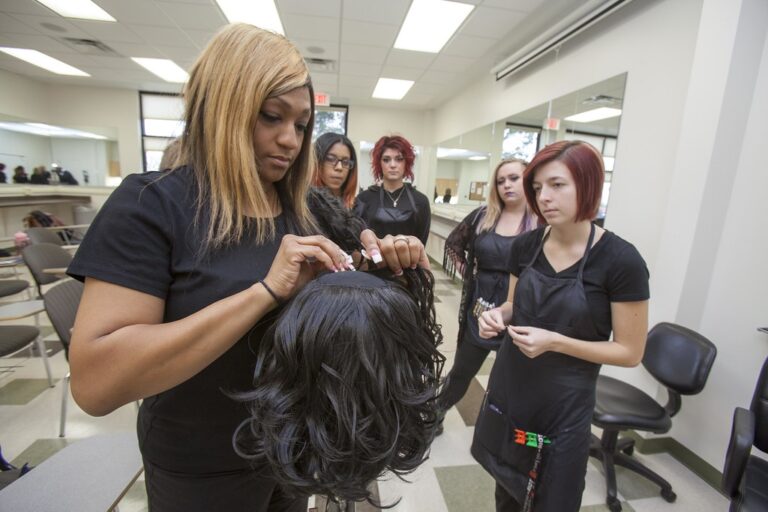
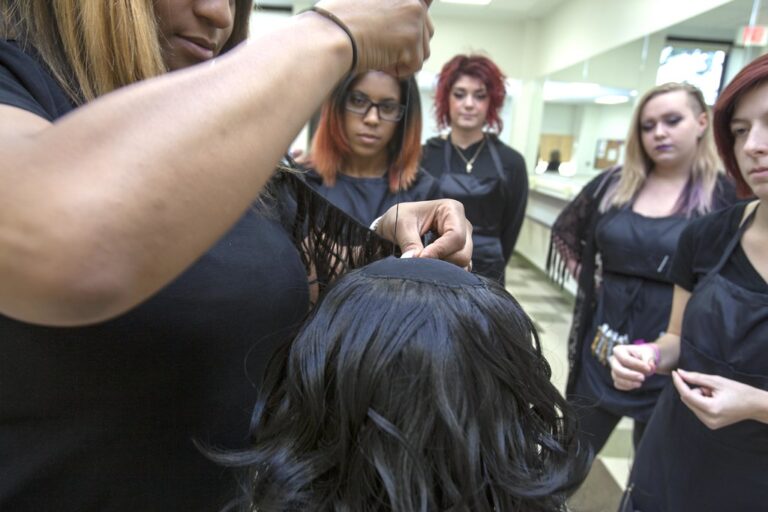
A cosmetology license is the industry’s broad credential: cutting and styling across all lengths, color and chemical texture services, plus foundational skin, makeup, and nail training. It is the license built for range — a wedding stylist, a colorist, and a blowout-bar specialist can all be working the same cosmetology credential. Our complete beginner’s guide to cosmetology unpacks that breadth in depth.
Side by Side: the Practical Differences
| Barber school | Cosmetology school | |
|---|---|---|
| Typical required hours | 1,000–1,500 | 1,000–1,600 |
| Full-time program length | 9–13 months | 8–15 months |
| Core skills | Clipper precision, fades, shaves, beard work | Cutting all lengths, color, chemical texture, styling |
| Chemical services | Light coverage | Major curriculum pillar |
| Straight-razor shaving | Yes — often exclusive to barbers | Excluded in many states |
| Typical first job | Barbershop chair or assistant | Salon assistant or commission stylist |
| Client rhythm | 20–45 min visits, 2–4 week returns | 45 min–3 hr visits, 4–8 week returns |
| Service ticket size | Lower per visit, higher frequency | Higher per visit, lower frequency |
Hours vary meaningfully by state — a few license the two trades almost identically — so treat the table as the national pattern and your state board as the authority.
The Two Economics, Explained
The money question deserves more than a shrug, and the honest answer is structural: the two careers build income through different machinery.
Barbering is a frequency business. A fade degrades visibly in three weeks, which means a barber’s clients return twelve to twenty times a year, mostly on autopilot. Eighty genuine regulars can nearly fill a calendar, and the rebooking conversation is short because the need is obvious. Revenue per visit is lower, but the compounding is relentless, and tips in busy shops are substantial.
Cosmetology is a ticket-size business. Color, texture, and event services command far higher per-visit prices — but clients return every five to eight weeks, and filling gaps between their visits requires continuous marketing, referrals, and retail. The stylists who thrive learn to smooth the frequency problem with memberships, standing appointments, and add-on services.
Neither machine is better. They reward different temperaments: barbering suits people who love rhythm, repetition mastered to excellence, and a packed schedule; cosmetology suits people energized by variety, transformation projects, and higher-stakes consultations.
Culture: the Part Nobody Puts in a Brochure
Spend a day shadowing in each environment before you choose, because the cultural difference is real. Barbershops tend to run casual, conversational, and communal — the shop itself is a social institution, and regulars come partly for the room. Salons run more appointment-driven and service-intense, with deeper one-on-one client relationships and a heavier styling-and-consultation layer.
Students who pick against their temperament usually discover it in the first months of work, not in school. If you genuinely cannot picture which room fits, that shadow day — most shops and salons will happily host a polite request — is the cheapest career research available.
Two Mornings, Told Honestly
The barbershop at 10 a.m.
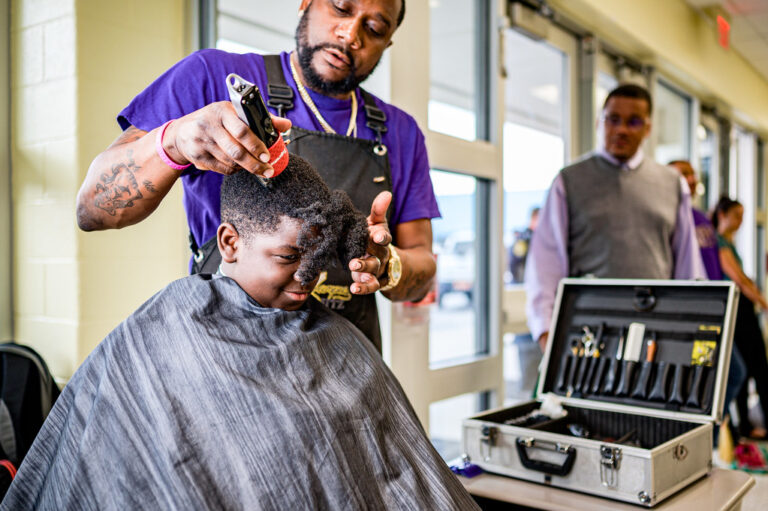
Three chairs running, music low, a wait of two on the bench who came anyway because it is their barber. Each service is a compact performance: consult in thirty seconds (“same as last time, tighter on the sides”), twenty-five minutes of clipper work refined by ten thousand repetitions, hot lather on the neckline, done. The barber will do eleven more before closing and knows nine of them by name, kids’ names included. Mastery here looks like consistency — the fifty-second fade as clean as the first.
The salon at 10 a.m.
One client, ninety minutes in. Foils are processing while the stylist consults with her next appointment over coffee — a photo of copper balayage, a candid conversation about what her hair can realistically do in one session versus three. The morning holds four clients total, but two are transformations with real stakes, and one will tip like it. Mastery here looks like judgment — knowing what the hair, the chemistry, and the calendar will actually allow, then delivering it.
Both mornings are skilled labor at a high level. They are simply different sports, and most people feel a pull toward one within minutes of watching.
Training Costs and the School Decision
Tuition ranges overlap heavily: expect roughly $5,000–$15,000 for barber programs and $5,000–$20,000 for cosmetology, plus kits and exam fees in both cases. Because the programs are similar investments, the school-quality questions matter more than the price tags — first-attempt pass rates, clinic volume, and itemized total costs. We keep a full evidence-based checklist in our guide to choosing the best beauty school, and it applies identically to barber programs.
One structural note: both licenses conclude with a written and practical state exam, and in both, sanitation procedure is the most heavily weighted — and most commonly failed — component. School habits become exam scores.
The Crossover Option Most People Miss
This decision is not permanent. Most states offer crossover programs: a licensed cosmetologist can earn the barber credential (or vice versa) with a fraction of the full hours, since the overlapping coursework is credited. Professionals use this strategically — a cosmetologist adds barbering to serve short-cut clients properly; a barber adds cosmetology to offer color. If you are truly split, the practical advice is to start with the license whose daily environment you prefer and treat the second as a year-three expansion, not a fork you got wrong.
And if your real interest keeps drifting toward skin rather than hair at all, pause before either program — that instinct usually points to esthetics, which is a different license entirely with its own shorter path.
How to Actually Decide: Five Questions
- Which room energized you more when you stood in it — the shop or the salon?
- Do you want mastery of a focused craft (fades, shaves) or range across many services (color, texture, events)?
- Does a fast rhythm of short appointments appeal more than long transformation sessions, or less?
- How much does the straight razor matter to you? In many states, that service belongs to barbers alone.
- When you imagine your clientele, do you picture regulars on a three-week cycle or clients booking big seasonal changes?
Answer those honestly and the decision usually makes itself. Ties are rare — and crossover programs exist precisely for them.
Frequently Asked Questions
Can a cosmetologist work in a barbershop?
Legally, in most states, yes — a cosmetology license covers cutting any client’s hair. Practically, barbershops hire for barbering skills: precision clipper work, fading, and shaving. A cosmetologist who wants barbershop work should expect to prove those specific competencies, and razor shaving is excluded from the cosmetology scope in a number of states.
Which license takes longer to earn?
Cosmetology, in most states. Barber programs commonly require 1,000–1,500 hours and cosmetology 1,000–1,600, but where the two differ within a state, barbering is usually the shorter track. Check your own state board — a few states flip this or license the two nearly identically.
Can I hold both licenses?
Yes, and crossover programs make it efficient: many states credit a licensed barber or cosmetologist with a large share of the hours toward the second license, cutting the additional schooling to a fraction of the full program.
Which career earns more?
Neither, categorically. Barbering compounds through visit frequency (a two-to-four-week cycle); cosmetology compounds through higher-ticket services like color. Top earners in both fields share the same trait: a full book of retained clients. Choose the environment you can sustain, because sustained years behind the chair are what actually produce the income.
Is barbering only for men’s hair?
No. Barbers cut anyone’s hair, and many women seek out barbers for short precision cuts and fades. The license is defined by techniques — clipper work, shaving, short-form cutting — not by the gender of the person in the chair.
The Bottom Line
Barber school and cosmetology school are parallel doors into the same industry: comparable time, comparable cost, different crafts, different daily rhythms. The barber license buys depth in precision cutting and shaving inside a frequency-driven business; the cosmetology license buys breadth across hair, color, and beyond inside a ticket-size business. Pick the working life, not the label.
We train both. Compare our barber program and cosmetology program pages, or better, visit campus and stand in both classrooms in a single afternoon — the fastest honest answer available.