What to Expect During Your First Week at Beauty School
Nobody warns you about the shoes. Ask any beauty school student what surprised them most about week one and shoe regret comes up constantly — because nothing in ordinary life prepares you for standing at a styling station for six hours. The nerves you are feeling right now are universal, and so is the discovery that most of what you worried about never happens.
Here is what the first week actually holds, drawn from what our instructors at USA Academy Beauty School watch new classes experience every enrollment cycle — plus the small preparations that make it noticeably easier.
Day One Is Paperwork, Tours, and Your Kit
Expect orientation, not scissors. You will tour the campus, meet instructors, review attendance policy in detail (more on why that matters below), and receive your student kit — the set of professional tools you will use for the entire program.
A typical cosmetology kit includes shears, clipper set, combs and brushes, a blow dryer and irons, rollers and clips, and at least one mannequin head. Esthetics and nail kits swap in treatment products and implements. Two pieces of advice veterans give about kits:
- Label every single item the day you get it — kits are identical, and mix-ups are the number-one source of week-one friction
- Do not upgrade tools yet; learn on the standard kit first so you can feel the difference when you eventually invest in better shears
Why the First Lessons Are About Cleaning, Not Cutting
Many students are surprised — sometimes disappointed — that early classes focus on sanitation and infection control rather than technique. There are two good reasons.
First, it is the law: disinfection standards are state-regulated, and schools must certify you in them before you touch anyone. Second, it is where careers are quietly won and lost. Sanitation is the most heavily weighted section of most practical licensing exams, and later, in a salon, it is what separates professionals clients trust from ones they quietly stop booking.
Treat those early lessons as exam prep three months ahead of schedule, because that is exactly what they are.
A Realistic First-Week Day
| Time | What you are doing |
|---|---|
| 9:00 – 10:30 | Theory: infection control, tool care, safety |
| 10:30 – 12:00 | Instructor demonstration at the stations |
| 12:00 – 12:45 | Lunch — sit with new people on purpose |
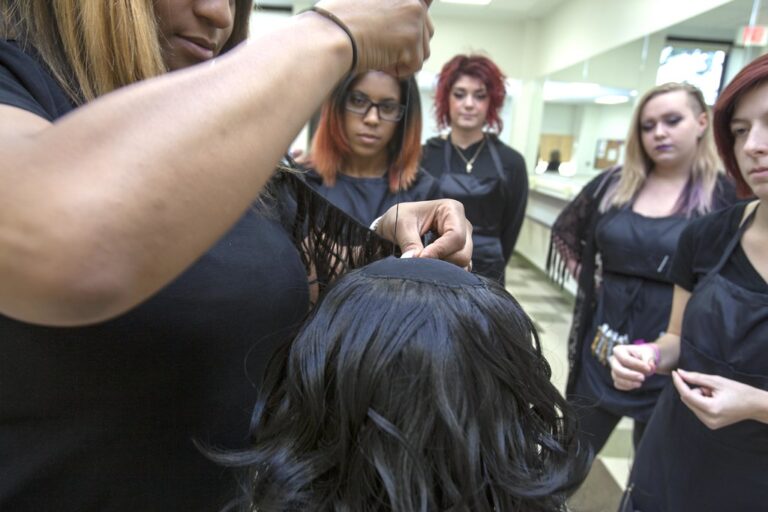
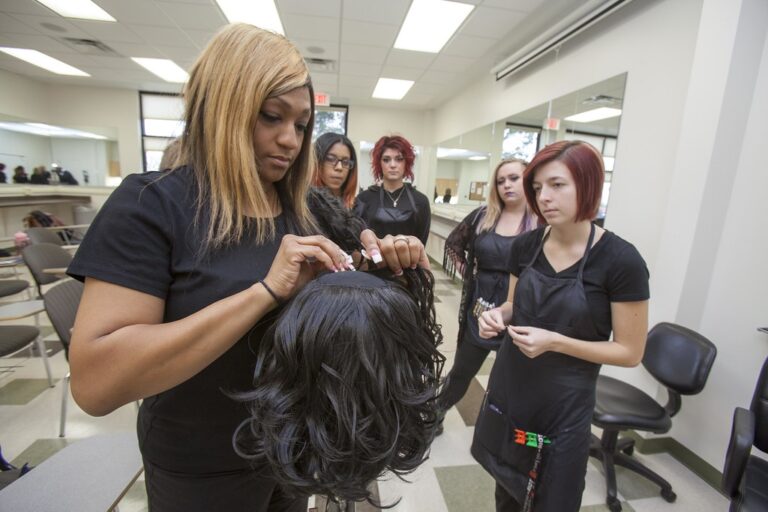
| 12:45 – 3:00 | Guided practice on your mannequin |
| 3:00 – 4:00 | Cleanup, station checks, and review |
The rhythm — theory, watch, do, review — repeats throughout the program. By Friday it already feels routine, which is its own small confidence boost.
Your Hands Will Disobey You, and That Is Normal
Mid-week, tools go in your hands: sectioning hair, holding shears with your ring finger (which feels absurd for exactly four days), basic clipper passes, or in esthetics, cleansing sequences on a classmate. Expect clumsiness. Expect the student next to you to look inexplicably better at it.
Here is the perspective instructors wish they could install in every new student: coordination in this field is built through repetition, not talent. The person struggling in week one and the person coasting are usually indistinguishable by month three — except when the strugglers practiced more, in which case they are ahead. Fifteen minutes of nightly sectioning drills on your mannequin compounds faster than you would believe.
The Classmates Matter More Than You Think
Look around during orientation. Those strangers will practice services on your hair, quiz you before theory tests, and — years from now — refer clients to you and tell you which salons are actually good to work for. Beauty is a relationship industry, and your cohort is your first professional network. The single most useful social move in week one is simple: learn names fast and offer to be someone’s practice partner.
Five Small Things That Make Week One Easier
- Cushioned, closed-toe shoes — the item every second-week student wishes they had bought sooner
- A notebook you actually carry — theory from week one reappears on the state board exam many months later
- Photos of your practice work — start the habit now; it becomes your portfolio and your proof of progress
- Questions asked immediately — instructors read silence as understanding, and confusion compounds
- A protein-heavy breakfast — practical days burn more energy than desk work; students who skip breakfast fade by 2 p.m.
About Attendance — the Rule With Teeth
Schools track hours to the minute because your state requires a documented total for licensure. Missed time is not just frowned upon; it must be made up, occasionally at extra cost, and chronic absence can push your graduation and exam date back by months. Building the show-up-early habit in week one is genuinely easier than repairing the alternative later.
The Complete Day-One Packing List
Orientation letters cover the essentials; veterans add the rest. Here is the combined list students wish they had on the first morning:
- Your enrollment paperwork, photo ID, and any required health documentation
- Closed-toe cushioned shoes already broken in — not new ones
- A notebook and two pens, or a tablet you genuinely take notes on
- A water bottle and protein-heavy snacks; practical floors burn energy
- Hair ties and minimal jewelry — both are usually dress-code items anyway
- A small padlock if your school assigns lockers
- Phone charger, because photographing practice work starts immediately
- A light cardigan or layer — classrooms and clinic floors run different temperatures
And one item to deliberately leave home: expensive personal tools. Learn on the standard kit first; upgrades mean more after your hands know the difference.
Choosing Your Practice Partners Wisely
By the end of week one, informal pairs and study groups start forming, and the choice matters more than students realize. The ideal practice partner is not your fastest classmate or your closest friend — it is the person who shows up every day and tells you the truth about your sectioning. Consistency and honesty compound; talent without attendance does not.
Instructors suggest a simple structure: trade services evenly, verbalize what you are doing while you practice (it mirrors how several state practical exams are scored), and end each session naming one thing the other person improved and one thing to drill next. Groups that adopt that ten-second ritual progress visibly faster by mid-program — and they are the same clusters that later trade job leads and referrals as working professionals.
Where Week One Leads: the First-Month Arc
Week one is orientation, sanitation, and first fundamentals. Weeks two through four raise the tempo in a predictable arc: mannequin work moves from single skills to complete basic services, theory shifts from safety rules into the chemistry and anatomy that licensing exams draw from, and by the month’s end most programs run their first graded practical assessments. Students who kept the daily fifteen-minute practice habit from week one typically clear these first assessments comfortably; students who only practiced in class feel the first squeeze here.
The month also brings the first individual feedback conversations with instructors — treat these as free coaching, and arrive with your own list of weak spots. The full journey from these early weeks to state boards is mapped in our step-by-step guide to becoming a licensed cosmetologist, and if you are still deciding where to enroll in the first place, our school-selection checklist is built for exactly that decision.
For Parents and Partners Reading Along
A surprising number of first-week questions come not from students but from the people supporting them, so this section is for you. Beauty school is a licensed vocational program with legally mandated hours, graded assessments, and a state examination at the end — closer in structure to nursing prerequisites than to a hobby course. The tuition is a genuine investment, and the outcome is a state credential that cannot be outsourced or automated.
What support actually helps in week one: patience with tired evenings (practical floors are physical), a willingness to be a practice head for haircut sectioning or a hand model for manicure drills, and zero commentary about the awkward early results. Every professional whose work you admire produced terrible practice work first — at higher volume than anyone admits. The students who thrive almost universally name one supportive person who treated their training as real from day one. Be that person and you have materially improved their odds.
The One Mindset Shift That Predicts a Good First Month
If a single idea separates students who settle in quickly from those who struggle, it is this: treating school as their first professional job rather than their last stretch of studenthood. Arriving early, dressing to the code without being reminded, protecting attendance like a shift, asking questions the moment confusion appears — these are workplace habits, and beauty school is deliberately structured as a rehearsal for the workplace.
The practical floor mirrors a salon, the clinic mirrors a client book, and the instructors mirror the senior colleagues who will someday mentor you. Students who lean into that framing find that week one is not a hurdle before the career. It is the career, in miniature, from the first morning.
What Week One Looks Like in Each Program
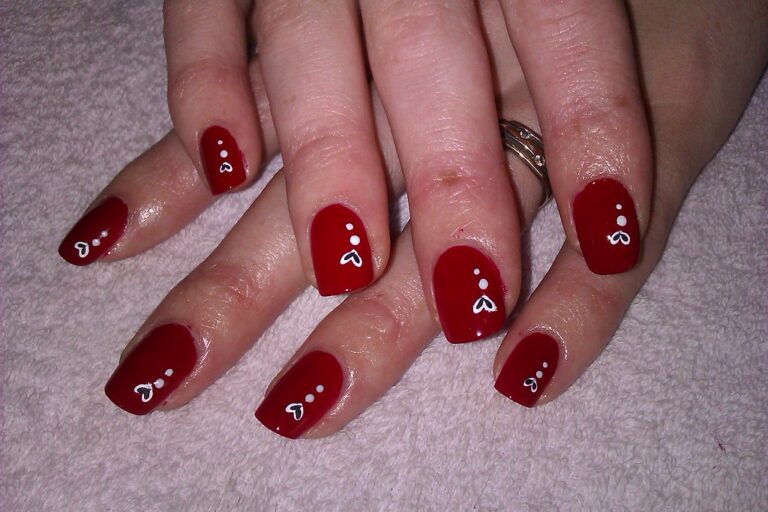
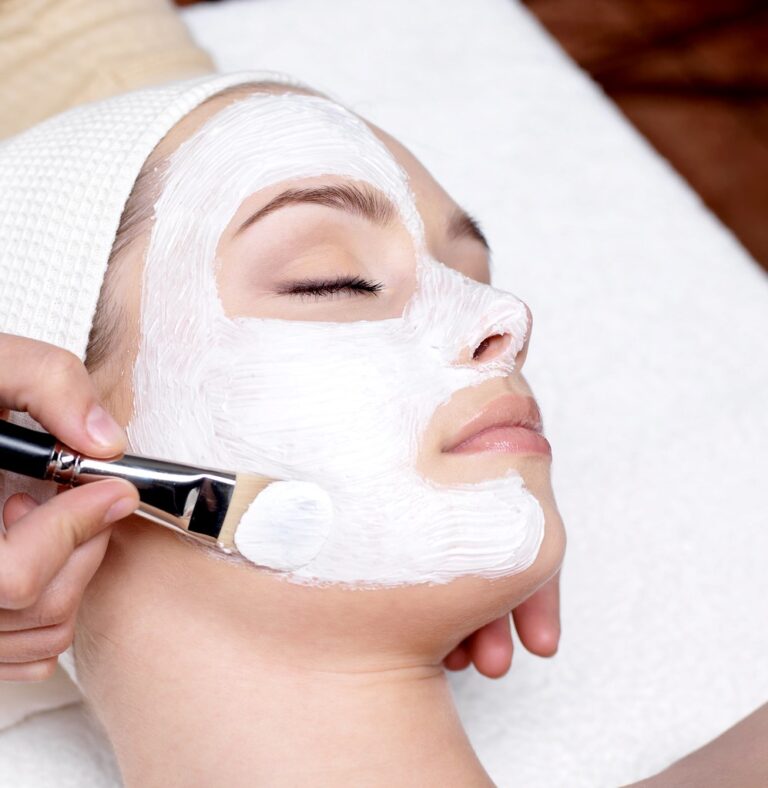
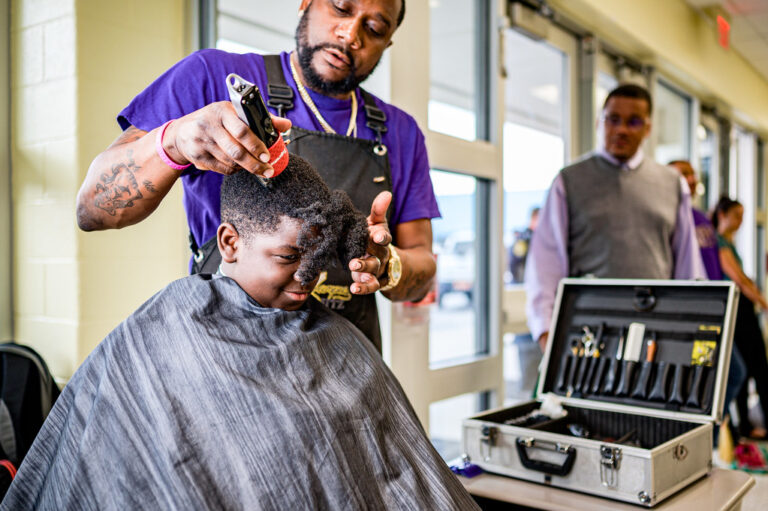
The rhythm described above holds everywhere, but the specifics flavor differently by program. Cosmetology students spend their first practical hours on sectioning and blow-dry fundamentals. Barbering cohorts meet the clipper family early — guard sizes, blade care, and the fade’s geometry on a mannequin. Esthetics students begin with draping, cleansing sequence, and the magnifying lamp; their week one is quieter and more clinical, matching the profession itself, as our esthetics explainer describes. Nail technology classes start at the practice hand: filing angles, cuticle care, and polish control before any product chemistry. Different tools, identical principle — fundamentals first, repetition always.
Frequently Asked Questions
Will I touch real clients in week one?
No — mannequins and, later, classmates come first. Clinic clients arrive only after you have demonstrated fundamentals under supervision, typically some weeks in. Nobody is thrown into the deep end.
What should I wear?
Schools set a dress code — usually black, professional, and closed-toe. Within it, dress like the professional you intend to become; clinic clients will eventually see you before they see your work.
I am older than most students. Will I fit in?
Career changers are a substantial share of every cohort, and instructors consistently report they arrive with better study habits. Cohorts bond over shared struggle, not shared age.
What if week one convinces me I chose the wrong program?
Talk to your instructors and admissions before deciding anything. Sometimes it is ordinary adjustment shock; sometimes a switch — say, from cosmetology to esthetics — is genuinely right, and catching it early minimizes lost time and money.
Come Watch a First Week in Progress
The fastest cure for first-day nerves is seeing the room beforehand. Book a campus tour and we will time it so you can watch a class mid-session — students at mannequins, instructors circulating — so your week one starts in a place you have already stood.