How to Become a Licensed Cosmetologist: Step-by-Step Guide
The path to a cosmetology license looks intimidating from the outside — training hours, applications, a two-part exam — but it is really just a sequence of six steps that thousands of people complete every year. This guide walks through each one in practical detail, including the parts schools sometimes gloss over: what the exams actually test, where the hidden costs sit, and which mistakes delay licenses unnecessarily.
Step 1: Look Up Your State’s Rules Before Anything Else
Licensing is governed state by state, and the differences are bigger than most people expect. Texas and New York require 1,000 training hours; California dropped its requirement from 1,600 to 1,000 in 2022; a handful of states still ask for 1,500 or more. Minimum ages range from 16 to 18, and most states want a high school diploma or GED.
Spend twenty minutes on your state board’s website and write down three things: required hours, exam format, and application fees. Every decision that follows — which school, which schedule, what budget — depends on those numbers. If you later move, many states offer reciprocity for licensed professionals, though some require you to top up hours or retest.
Step 2: Pick a School Like an Investor, Not a Shopper
Tuition for a full program typically runs anywhere from about $5,000 at a community college to $20,000 or more at a private academy, before kits, books, and exam fees. With that much at stake, compare schools on evidence rather than atmosphere:
- First-attempt pass rate — the single clearest quality signal, and any well-run school tracks it
- Clinic volume — how many services on real clients you will log before graduating
- Schedule fit — day, evening, and part-time tracks exist precisely because most students also work
- Everything in writing — total cost of attendance, refund policy, and hour make-up rules
Our cosmetology program publishes these details during enrollment, and we would encourage you to demand the same from any school you visit.
Step 3: The Hours — What Training Actually Covers
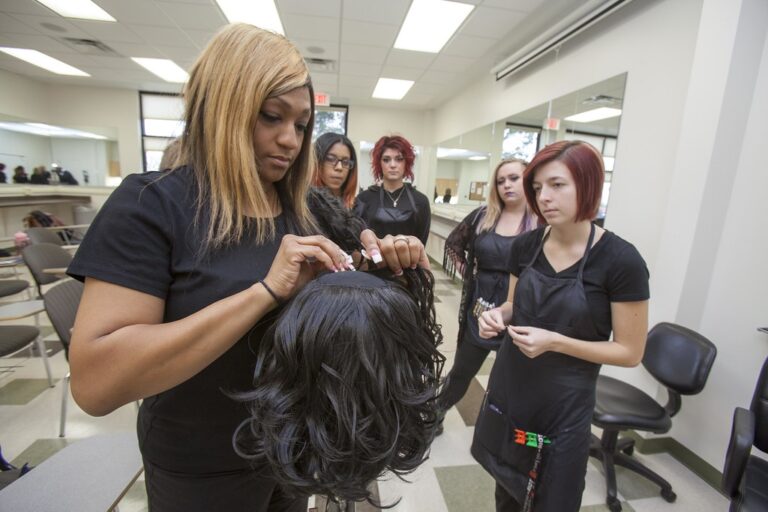
Coursework splits roughly into theory and practical work. Theory covers the science that the written exam leans on: chemistry of color and relaxers, skin and scalp conditions, anatomy, and — heavily — infection control. Practical training progresses from mannequins to classmates to supervised services on clinic clients.
A realistic timeline, assuming a 1,000–1,500 hour requirement:
| Schedule | Weekly pace | Time to finish |
|---|---|---|
| Full-time | 30–35 hours | 8–12 months |
| Part-time (evenings) | 15–20 hours | 15–24 months |
| Hybrid theory + campus practical | 20–25 hours | 12–18 months |
One habit separates students who cruise through from those who struggle: treating attendance as non-negotiable. Hours are a legal requirement, and missed time has to be made up — sometimes at extra cost.
Step 4: File Your Exam Application Early
Around 80–90% of the way through your hours, your school will help you submit proof of training, ID, and fees to the state board or its testing vendor. Processing can take weeks. Students who file late often sit idle after graduation waiting for an exam date — an avoidable gap during which skills get rusty and motivation fades.
Step 5: Pass the Written and Practical Exams
Most states use exams developed by national testing organizations, delivered through companies like PSI or Prometric, with fees commonly in the $50–$150 range per section.
The written test
Multiple choice, usually 100–120 questions covering infection control, chemistry, anatomy, and service procedures. The questions reward understanding over memorization — expect scenarios (“a client presents with…”) rather than definitions.
The practical test
You demonstrate services on a mannequin while examiners score technique and, above all, sanitation. Most failed practicals are lost on procedure — an unsanitized implement, a skipped hand-washing step — not on the haircut itself. Practice narrating your sanitation steps out loud until they are automatic; some states require verbal explanation anyway.
If you do fail a section, it is not catastrophic: states allow retakes after a waiting period and a new fee. You retest only the failed section, not both.
Step 6: License in Hand — Now Build the Career
Your first year matters more than your first job title. Assisting a senior stylist pays less than taking a chair immediately but compresses years of learning into months. Whichever route you choose, rebook clients before they leave, photograph your work from day one, and expect your income to climb as your book fills — most licenses renew every one to two years, and some states ask for continuing education along the way.
The Full Journey at a Glance
- Confirm state requirements — 20 minutes, free
- Choose and enroll in a school — allow 1–2 months of research
- Complete 1,000–1,600 hours — 8 to 24 months depending on schedule
- Apply for the exam — file weeks before finishing
- Pass written and practical — budget $100–$300 including fees
- Receive your license and start working — renewals every 1–2 years
State Differences That Actually Trip People Up
Because licensing is state law, small print differences catch students who move or train across state lines. The ones worth checking before you enroll anywhere:
- Hour totals differ sharply. Neighboring states can be 500 hours apart. If you might relocate mid-training, ask both boards how transfer hours are evaluated before you start, not after.
- Reciprocity is not automatic. Many states honor an existing license through endorsement; others demand additional hours or a fresh exam. States also sometimes waive requirements for licensees with several years of work experience — experience can be worth hours.
- Apprenticeship rules vary. The minority of states that allow salon apprenticeships in place of school typically require roughly double the hours under a licensed supervisor.
- Exam vendors differ. Some states run their own tests; many contract national providers. The candidate handbook for your specific state — free to download — lists exactly what will be scored.
None of this is a reason for anxiety. It is a reason to spend one evening on your state board’s website before spending a year of your life in a program.
A Sample Budget, Line by Line
Averages hide the texture, so here is what a realistic all-in budget looks like for a mid-priced private program in a mid-cost state:
| Line item | Typical range |
|---|---|
| Tuition | $8,000–$16,000 |
| Student kit and tools | $500–$1,500 |
| Textbooks and digital materials | $150–$400 |
| State exam fees (written + practical) | $100–$300 |
| License application fee | $25–$100 |
| Transportation and parking over the program | $300–$1,200 |
| Hour make-up fees if attendance slips | $0 if you show up — budget zero and protect it |
Two notes from financial aid advisors: first, ask every school which of these lines its quoted price already includes, because bundling practices differ wildly. Second, build your personal budget on part-time income assumptions during training — students who plan for lean months finish; students who assume overtime hours will always be available often pause programs mid-way, which is the costliest outcome of all.
How First-Try Passers Actually Study
Instructors who have watched hundreds of students sit boards describe the same pattern among those who pass on the first attempt. They treat mock exams as real — same time limits, same silence, same kit setup. They study sanitation procedure past the point of boredom, because it is weighted heavily and purely procedural: free points for the disciplined. They form study pairs and quiz aloud, since verbalizing theory is close to what several states require during practicals anyway. And they book the real exam within weeks of finishing hours, while hands are sharpest.
What first-try passers do not do is cram trend knowledge. Boards test fundamentals — chemistry, safety, procedure — and the students who fail are rarely short on talent. They are short on reps under exam conditions.
Your First 90 Days With a License
The guide ends at licensure, but careers begin there, so a brief preview. The strongest opening move is deciding deliberately between assisting at a strong salon and taking a chair immediately — a tradeoff we cover fully in our map of career opportunities after beauty school. Whichever door you choose, the first ninety days reward three habits above all: rebooking every client before they leave, photographing every service for the portfolio, and asking senior colleagues to watch your work — the free mentorship most new professionals never request. If you are still choosing where to train, our evidence-first checklist for picking a school is the natural next read.
If You Are Changing Careers, Read This First
A substantial share of cosmetology students are not eighteen — they are twenty-eight or forty-five, leaving retail, healthcare, offices, or parenting years, and their questions differ. Can I afford the income dip? Will I be the oldest person in class? Is it too late to build a clientele?
The honest answers, in order: the income dip is real but time-boxed — part-time evening tracks exist precisely so career changers can keep earning while training, stretching the program but protecting the household budget. You will not be the only adult in the room; instructors consistently note that career changers arrive with sharper study habits and better client conversation than younger cohorts, because both are transferable skills from previous work. And clientele-building actually favors people with existing networks — a former nurse or teacher enters the industry already known and trusted by hundreds of potential clients.
The one adjustment career changers underestimate: the physicality. Standing service work uses the body differently than most prior careers. Budget real money for good shoes and real time for building stamina in the first month — then the advantage tilts your way.
One last piece of perspective before the questions people ask most: every requirement in this guide — the hours, the exams, the fees — exists because the state treats you as a future professional entrusted with public safety. The process can feel bureaucratic from the outside. From the inside, it is the credential that lets you charge professional prices for the rest of your working life. Eighteen months of process for decades of career is, on the arithmetic alone, one of the better trades available.
Frequently Asked Questions
Can I skip school and apprentice instead?
A minority of states allow apprenticeship routes, but they usually demand roughly double the hours and can take two to three years. They suit people with an established mentor, not most beginners.
Is financial help available?
Often, yes — federal aid at accredited schools for students who qualify, plus payment plans and occasional scholarships. Our financial aid page explains the options we help students navigate.
Does an online cosmetology course count?
Theory can sometimes be completed online, but every state requires in-person practical training. Any program promising a license entirely over the internet is misleading you.
How current does my knowledge need to be for the written exam?
Exams are updated slowly, so your textbook will cover it. Trends matter for employment, not licensure — study the book for the test, and social media for your first job interview.
Start With One Conversation
If cosmetology is the direction you are leaning, the efficient next step is a campus visit: see the clinic, meet instructors, and get real numbers for your situation. Schedule a tour or review how admissions works — both cost nothing and answer more than hours of searching.